

 English
 عربى

Thermal Break Aluminium Windows: Understanding the Technology Behind Better Energy Efficiency
Nov 12, 2026
Content
- 1 Why Thermal Break Technology Matters
- 2 What Is a Thermal Break in Aluminium Windows?
- 3 How Does Thermal Break Technology Work?
- 4 Key Benefits of Thermal Break Aluminium Windows
- 5 Why Glazing and Aluminium Profiles Must Work Together
- 6 What Should Buyers Consider Before Choosing a Thermal Break Window?
- 7 The Future of Aluminium Window Technology
- 8 Conclusion
- 9 Looking for Aluminium Window and Door Solutions for Your Next Project?
A practical guide to polyamide thermal barriers, glazing, condensation control and whole-window performance.
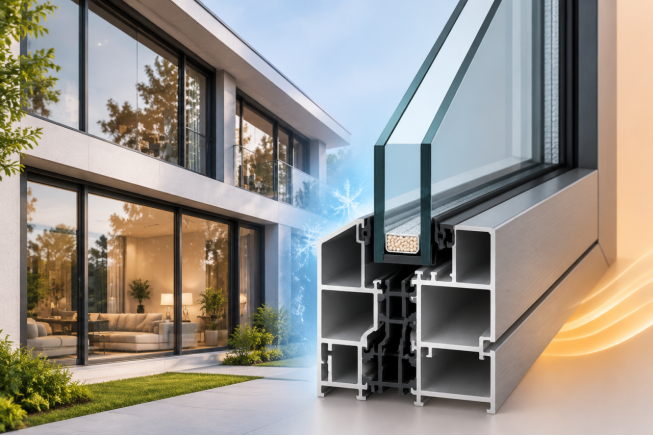
Why Thermal Break Technology Matters
Modern buildings require windows that do more than provide natural light and attractive views. They must also help maintain indoor comfort, improve energy efficiency, reduce unwanted heat transfer, and withstand changing weather conditions.
This is one reason why thermal break aluminium windows have become an important consideration in residential and commercial construction projects worldwide. But what exactly is a thermal break, how does it work, and why does it matter when selecting aluminium window systems?
What Is a Thermal Break in Aluminium Windows?
Aluminium is widely used in window and door manufacturing because of its strength, lightweight structure, durability, and design flexibility. However, aluminium is also a highly conductive material. Without appropriate thermal insulation, heat can transfer relatively easily through an aluminium window frame.
A thermal break is designed to reduce this heat transfer. It generally consists of an insulating polyamide strip positioned between the interior and exterior aluminium sections of a profile. This creates a separation between the two metal sections, reducing the direct path through which heat can travel.
The result is a window frame designed to provide better thermal insulation than a comparable non-thermally-broken aluminium frame.
How Does Thermal Break Technology Work?
The principle is based on reducing thermal conductivity through the window frame. During hot weather, outdoor temperatures can increase heat transfer toward indoor spaces. During colder seasons, heat from the interior can escape through less-insulated building components.
A properly designed thermal break helps limit this transfer by introducing an insulating barrier within the aluminium profile.
The effectiveness of the system depends on several engineering factors, including:
- The material and dimensions of the polyamide insulation strip.
- The geometry and internal chamber design of the aluminium profile.
- The mechanical connection between the aluminium sections and insulating strip.
- The glazing configuration and glass thickness.
- The quality of the weather seals and installation.
These elements work together to determine the overall thermal performance of the window.
Key Benefits of Thermal Break Aluminium Windows
- Improved Thermal Insulation: Thermal break technology helps reduce heat transfer through the aluminium frame, supporting more comfortable indoor environments in different climatic conditions.
- Better Indoor Comfort: By improving the insulation characteristics of the frame, thermal break systems can help reduce temperature differences near windows and contribute to a more comfortable living or working environment.
- Reduced Condensation Risk: When indoor air comes into contact with a sufficiently cold surface, condensation may occur. Thermal break technology can help maintain a higher interior frame surface temperature, reducing condensation risk under suitable conditions. Actual performance also depends on indoor humidity, ventilation, glazing, and installation quality.
- Energy-Conscious Building Design: By improving the thermal performance of the window assembly, thermal break systems can contribute to reducing heating and cooling requirements. Actual energy savings depend on the complete building design, local climate, glazing specification, and building operation.
Why Glazing and Aluminium Profiles Must Work Together
One common mistake when selecting aluminium windows is focusing only on the thermal break. In reality, the complete window system determines its performance.
Double-glazed or triple-glazed units can provide additional insulation when appropriately specified. Low-emissivity glass coatings, insulated glazing spacers, high-quality sealing systems, and suitable frame configurations can further influence the final result.
For architects, contractors, developers, and project owners, it is important to evaluate the complete window assembly rather than considering individual components separately.
What Should Buyers Consider Before Choosing a Thermal Break Window?
Before selecting a thermal break aluminium window system, buyers and project specifiers should evaluate several important factors:
- Profile Design: Check the aluminium profile dimensions, internal structure, and thermal break configuration.
- Insulation Material: Understand the material properties, dimensions, and mechanical connection of the insulating strip.
- Glass Configuration: Select suitable glazing based on the project's thermal, acoustic, safety, and architectural requirements.
- Sealing Performance: Ensure that appropriate weather seals and drainage arrangements are included.
- Structural Requirements: Consider window dimensions, wind pressure, hardware selection, and installation conditions.
- Testing and Documentation: Request relevant technical specifications and applicable test reports to verify the performance of the proposed window configuration.
The Future of Aluminium Window Technology
As modern architecture continues to prioritize energy-conscious construction, thermal performance, and sustainable building design, aluminium window engineering is becoming increasingly important.
Manufacturers are continually developing profile structures, insulation technologies, glazing combinations, and sealing solutions to meet the changing expectations of the global construction industry.
Thermal break aluminium windows represent an important development in this direction, combining the structural advantages of aluminium with improved thermal insulation characteristics.
For residential buildings, commercial developments, hotels, offices, and large-scale architectural projects, choosing an appropriately engineered window system can make a meaningful difference to long-term building performance.
Conclusion
Thermal break aluminium windows are more than an architectural design feature. They are an engineered solution that helps address heat transfer, indoor comfort, and the thermal performance of modern building envelopes.
However, achieving good results requires more than simply selecting a thermal break profile. The aluminium structure, insulation material, glazing, sealing, fabrication, and installation must all work together.
Understanding these factors allows architects, developers, contractors, and international buyers to make better-informed decisions when selecting aluminium window systems for their projects.
Looking for Aluminium Window and Door Solutions for Your Next Project?
Zhejiang Dongcheng Energy Saving Technology Co., Ltd. provides aluminium window, door, curtain wall, sunroom, and related building system solutions for residential and commercial applications.
Visit www.dongchengwindows.com to explore our products and discuss your project requirements. Contact us for product information, technical consultation, and project cooperation.

- Mobile
- Products
- Aluminum Window Series
- Aluminum Door Series
- Aluminum Sunroom Series
- Aluminum Sunroof Series
- Aluminum Louver Series
- Aluminum Railing Series
- Aluminum curtain wall
- Aluminum panel
- Aluminum door, window and curtain wall auxiliary materials
- Contact Us
-
-
+86-137 5720 8001

-
[email protected]

-
Room 102, Building 7, No. 399 Shushan Road, Hudong Street, Wuxing District, Huzhou City, Zhejiang Province, China

-


