

 English
  عربى
عربى 
Custom Aluminum Sliding Window Suppliers | Dongcheng Manufacturer
Jul 29, 2026
Content
Why Choose Custom Aluminum Sliding Windows?
A developer managing a mixed-use project in Atlanta recently faced a reorder delay because standard aluminum sliding windows, ordered from a catalog, arrived with powder coat peeling after only three months of coastal exposure. The cost of replacement exceeded any upfront savings. This scenario repeats across projects when off-the-shelf units fail to match site-specific conditions. Custom aluminum sliding windows eliminate the compromises built into one-size-fits-all inventory.
Rough openings vary on every floor plan; even a 30 mm deviation from catalog dimensions forces costly on-site framing work. Custom fabrication aligns with as‑built site conditions, reducing rework and call‑backs. Beyond geometry, energy codes and wind‑load requirements differ by region. A custom specification lets a project engineer select the exact thermal break, glass package, and frame depth to meet the required U‑factor and structural performance without over‑engineering adjacent assemblies.
Architectural continuity also benefits. Powder coat or fluorocarbon finishes can match RAL or custom colors, and hardware styles can be coordinated across the building envelope. Aluminum’s natural corrosion resistance, light weight, and full recyclability make it a durable choice that fits modern green‑building criteria. The decision to go custom is less about luxury and more about controlling lifetime cost and performance.
Key Evaluation Criteria for Custom Aluminum Sliding Window Suppliers
Choosing a supplier requires a structured evaluation, not a blind comparison of unit prices. Four areas consistently separate reliable manufacturers from transactional factories: production quality systems, genuine customization bandwidth, verified thermal performance, and transparent logistics capability.
Manufacturing Capabilities and Quality Control
A supplier’s ability to deliver identical quality across hundreds of window units starts with documented processes. ISO9000 certification matters because it mandates controlled incoming material inspection, calibrated cutting and machining, and final assembly checks—not because it signals perfection. A manufacturer that operates without ISO9000‑level discipline introduces quality variability that only becomes visible after installation. CNC corner‑cleaners and automatic sawing centers improve repeatability, but the real safeguard is a closed‑loop inspection routine. Ask to see in‑line dimension checks and records of finished‑product water‑tightness testing. Dongcheng’s facility near Hangzhou operates under this framework, allowing buyers to learn about Dongcheng’s quality management system as a baseline reference for a factory visit.
Customization Options (Frame Types, Colors, Glass, Hardware)
Custom sliding windows go far beyond choosing profile width. A capable supplier should offer multiple frame configurations, surface treatments, glazing combinations, and hardware grades without routing every change through a distributor.
- Operation type: The classic left-right sliding window configuration
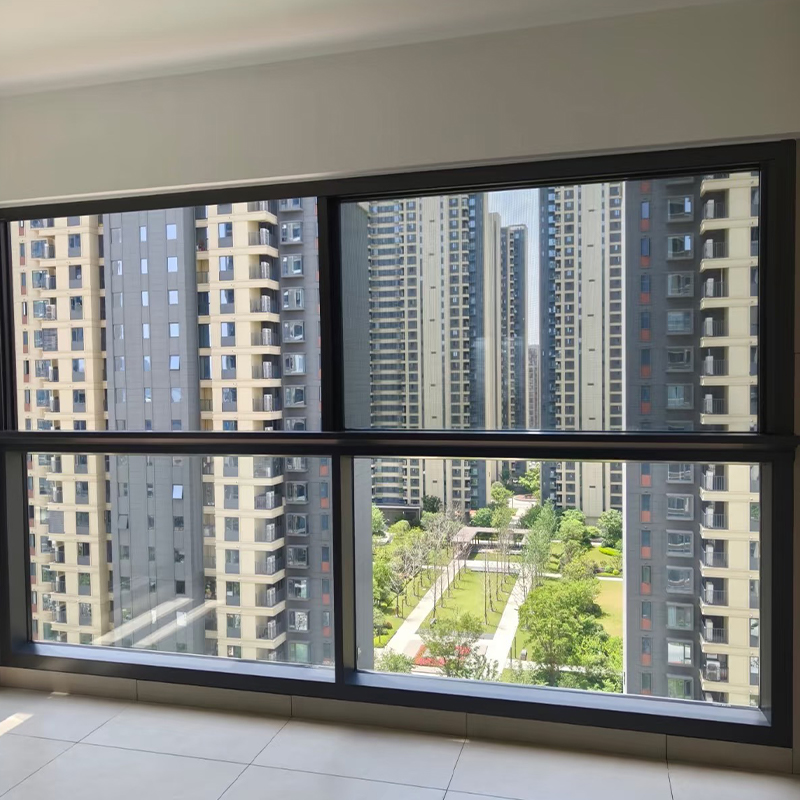 Wholesale Aluminum Left-Right Sliding Window Suppliers, Company - Zhejiang DongcDongcheng is Wholesale Aluminum Left-Right Sliding Window Suppliers and Company in China, The left-right sliding aluminum window is built...View Product → can be combined with fixed lites or high‑rise vents, adapting to ventilation and egress strategies without altering the surrounding curtain wall.
 - Surface durability: Buyers in coastal or high‑UV regions need more than a standard powder coat. Corrosion-resistant sliding window models
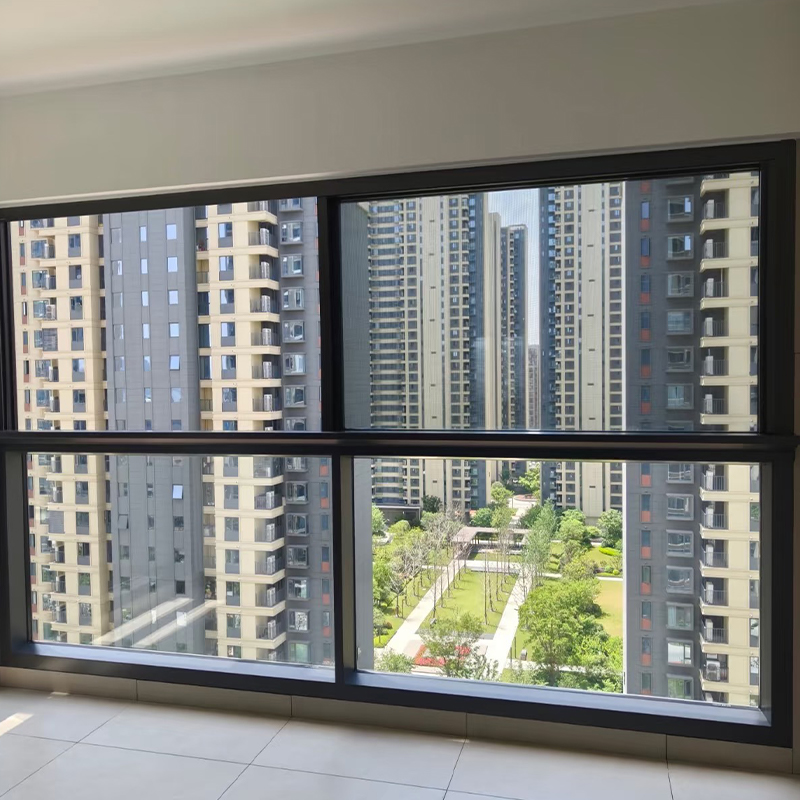 Wholesale Aluminum Corrosion resistant and UV resistant Sliding window SuppliersDongcheng is Wholesale Aluminum Corrosion resistant and UV resistant Sliding window Suppliers and Company in China, This aluminum sliding...View Product → with marine‑grade fluorocarbon paint and UV‑stabilized gaskets extend service life substantially, reducing maintenance cycles for building owners.
 - Glass and thermal options: Double‑ or triple‑glazed units with low‑e coatings, argon fill, and warm‑edge spacers should be specifiable to meet project energy calculations. The same applies to polyamide (PA66) thermal barriers in the frame, which cut thermal bridging without sacrificing structural strength.
- Hardware selection: From stainless‑steel rollers to multipoint lock sets, the supplier ought to offer brand‑name components that can be sourced locally for post‑installation servicing.
Thermal Performance and Energy Efficiency
Code‑mandated thermal performance is being tightened across ASHRAE climate zones, and sliding windows—with their large glass areas—often become the weak link in a building’s enclosure. The difference between a window that barely meets code and one that outperforms it lies in the interaction of the aluminium frame’s thermal break, the insulating glass unit, and the seal system. Without a high‑quality PA66 insulating profile separating the interior and exterior extrusion halves, condensation and energy loss are inevitable.
Request the whole‑unit U‑factor and solar heat gain coefficient values calculated according to NFRC or equivalent standards, not just center‑of‑glass numbers. A supplier that can provide both values demonstrates that they engineer the frame‑to‑glass interface, not just assemble components. Dongcheng’s sliding window range incorporates thermal‑break technology and multi‑chamber gasket designs that address this interface, helping designers meet performance budgets without adding costly secondary cladding.
Lead Time and Logistics Support
Project schedules do not wait for sea freight. A supplier’s production capacity and loading‑dock discipline determine whether windows arrive when the site is ready. Confirming weekly output, typical buffer stock of key profiles, and export packing standards—crates with moisture‑barrier wraps, corner protectors, and palletized bundles—is as important as negotiating unit cost. A factory’s logistics track record can be verified through site‑visit documentation and reference projects, not glossy brochures.
For example, Dongcheng’s engineering team recently conducted project site visits in the Philippines to confirm installation readiness and address field‑dimension feedback directly. Such visits reveal whether the supplier understands overseas installation conditions and can adjust packing or shipping sequences accordingly.
Common Pitfalls When Selecting an Aluminum Sliding Window Supplier
Procurement teams new to direct sourcing often make avoidable mistakes that erode project margin and schedule.
- Unverified material certificates: A supplier may claim 6063‑T5 alloy but deliver a softer, lower‑grade extrusion. Always request mill certificates with heat numbers that trace back to verified billet sources.
- Hidden line‑item exclusions: Pressed‑steel hardware instead of stainless, or single‑point locks instead of multi‑point, sharply reduce durability. The specification schedule must lock down every component, not just the frame profile.
- Incomplete factory audits: A video call showing a clean assembly line is not enough. Physical visits that scrutinize curing ovens, anodizing tank maintenance, and water‑testing rigs expose whether quality is maintained when nobody is watching. Dongcheng’s Hangzhou facility welcomes such on‑site verifications, which aligns with the expectations of serious procurement teams.
- Ignoring after‑sales support: Replacement gaskets or roller assemblies must be obtainable five years after delivery. A supplier that cannot provide consumable part lists and supply‑chain continuity for hardware brands creates expensive re‑spec risks.
Cost Expectation and Value Engineering
Custom aluminum sliding windows are not a commodity, and price comparisons only make sense within the same performance envelope. The table below outlines the primary factors that move cost, so buyers can target value‑engineering opportunities without compromising integrity.
| Factor | Price Influence | Value‑Engineering Consideration |
|---|---|---|
| Extrusion profile mass per meter | High | Match section depth to wind load; avoid oversizing in low‑rise zones. |
| Surface finish (powder vs. fluorocarbon) | Moderate | Spec fluorocarbon only for aggressive environments; powder coat suffices inland. |
| Glass specification (double vs. triple, low‑e) | Very high | Optimize with whole‑building energy model; triple glazing may be unnecessary on north facades. |
| Hardware brand and lock points | Moderate | Select mid‑tier, globally available brands to avoid sourcing disruption. |
| Thermal break material (PA66 vs. generic nylon) | Low | Never downgrade; the material cost delta is negligible compared to condensation risk. |
Dongcheng’s direct‑factory model removes intermediary markups, allowing the specification budget to be allocated to the profiles, glass, and hardware that actually drive performance. For a mid‑rise project, typical custom sliding window packages from an ISO9000‑certified factory fall within a range that is competitive with regional non‑custom alternatives once site‑modification costs are factored in.
Conclusion – Partner with a Reliable Custom Manufacturer
The search for custom aluminum sliding window suppliers ultimately narrows to a simple question: can this factory prove it will deliver the specified quality on time, with support that outlasts the project close‑out? A documented quality system, traceable material sourcing, thermal‑performance data, and a demonstrated logistics trail are not nice‑to‑have attributes; they are the minimum effective standards for a commercial procurement.
Firms that integrate these capabilities, such as Dongcheng, give architects and contractors the confidence to specify custom windows without gambling on delivery. When the next project demands sliding windows that fit the opening, meet the energy model, and resist the site environment for decades, starting the conversation with a supplier that offers both factory‑direct economics and verifiable engineering makes the decision straightforward. Request detailed cut sheets, arrange a factory audit, and compare whole‑unit performance numbers—not just prices per square meter.

- Mobile
- Products
- Aluminum Window Series
- Aluminum Door Series
- Aluminum Sunroom Series
- Aluminum Sunroof Series
- Aluminum Louver Series
- Aluminum Railing Series
- Aluminum curtain wall
- Aluminum panel
- Aluminum door, window and curtain wall auxiliary materials
- Contact Us
-
-
+86-137 5720 8001

-
[email protected]

-
Room 102, Building 7, No. 399 Shushan Road, Hudong Street, Wuxing District, Huzhou City, Zhejiang Province, China

-



