

 English
 عربى

Water Stain on Aluminum: What Causes It, How to Remove It, and Prevent It
Oct 21, 2026
Content
- 1 What Really Causes a Water Stain on Aluminum
- 2 Reading the Surface: Which Marks Wash Off and Which Do Not
- 3 How to Remove a Water Stain Without Damaging the Finish
- 4 What Not to Use on Architectural Aluminum
- 5 Design Details That Stop Stains Before They Start
- 6 A Maintenance Rhythm That Works
- 7 When the Stain Is Worth Reporting
A water stain on aluminum rarely means the metal is failing. More often it is a small record of what the surface has been through: a season of hard water from the garden hose, rain that dried slowly on a window sill, or a cleaner nobody rinsed away. We build aluminum windows, doors, sunrooms and curtain walls, and we have looked at a great many marked frames over the years. The encouraging part is that most of these marks sit on top of the finish and can be lifted off, and the few that cannot usually point to a detail worth correcting.
What Really Causes a Water Stain on Aluminum
Before reaching for a bottle, it helps to know which of these four situations you are actually dealing with.
Hard water and dissolved minerals
Tap water carries calcium and magnesium. When a droplet sits on a sill or a railing cap and evaporates, those minerals stay behind as a pale ring or a chalky film. Repeat that a few dozen times through a summer and the film becomes a visible outline of every drop. On matte or brushed surfaces the effect shows up faster, because mineral powder settles into the fine texture.
Rain, dust and slow drying
Rainwater is rarely clean by the time it runs down a facade. It picks up dust, pollen and traffic film, then dries in place on horizontal ledges, louver blades or railing caps. What is left behind is a mixture of mineral residue and dirt, which is why plain water sometimes makes the mark worse instead of better.
Water that cannot escape
The stubborn marks appear where water is trapped: window track channels, sills without working weep holes, the bottom rail of a sliding panel, or a skylight frame. Standing water keeps the surface wet for hours, concentrates minerals, and gives algae somewhere to settle. That is a design and maintenance question as much as a cleaning one.
Cleaning and construction residue
Glass cleaner overspray, alkaline degreasers, mortar splash and acid-based descalers all leave streaks that read as water stains. If a product was applied and not rinsed thoroughly, the residue keeps attracting moisture and dust, and the mark returns within weeks.
Reading the Surface: Which Marks Wash Off and Which Do Not
Colour, texture and location tell you most of what you need to know. When a customer sends us a photograph, this is the table we work through first.
| What you see | Likely cause | Reasonable next step |
|---|---|---|
| White ring or chalky film sitting on the surface | Hard water minerals | Diluted white vinegar, short dwell, rinse and dry |
| Grey or black speckling that feels rough | Oxidation or acid attack on the finish | Gentle wash only; refinishing may be needed |
| Faded, powdery coating with colour loss | Chalking from UV and age | Clean, then plan a coating refresh |
| Dark smudges around screws and fixings | Contact with a dissimilar metal | Clean, then replace with compatible fixings |
| Green or black patches in shaded areas | Algae and mildew on trapped moisture | Mild soap, soft brush, better drainage and airflow |
How to Remove a Water Stain Without Damaging the Finish
Work through these steps in order and stop as soon as the mark lifts. Aggressive moves cannot be undone, and architectural aluminum is usually anodized or powder coated rather than bare.
- Identify the finish first. Anodized, powder coated, painted and mill-finish aluminum all behave differently.
- Dust the surface dry with a soft brush before anything wet touches it, so grit is not dragged across the finish.
- Test any liquid on a hidden spot, such as the inside face of a frame or the back of a railing post.
- Wash with a pH-neutral solution, a few drops of dish soap in warm water, using microfiber and straight passes along the grain of the metal rather than circles.
- For mineral rings, apply a 1:1 mix of white vinegar and water for a minute or two at most, then rinse immediately. Never let an acid dry on the surface.
- Rinse with clean water and dry with a separate microfiber cloth, since drying is what prevents a fresh stain from forming as the water evaporates.
- Repeat gently over several days instead of scrubbing harder once. Mineral film softens with patience.
What Not to Use on Architectural Aluminum
- Steel wool, scouring pads and abrasive powders, which cut through the oxide layer or coating and leave scratches that trap dirt.
- Bleach and strong alkaline cleaners, which attack seal joints and dull powder coatings.
- Hydrofluoric or phosphoric brighteners sold for bare aluminum. They are formulated for truck bodies and will etch an anodized window frame.
- High-pressure washing aimed at seals, weep holes and gaskets, which forces water into exactly the places that cause the problem.
- Acid left to dry in the sun, which concentrates as it evaporates and marks faster than the original stain did.
Design Details That Stop Stains Before They Start
Cleaning is the short-term answer; drainage is the long-term one. In our own production in Huzhou we treat water management as part of the profile design rather than an accessory bolted on afterwards, because a detail that lets water leave quickly saves years of scrubbing later.
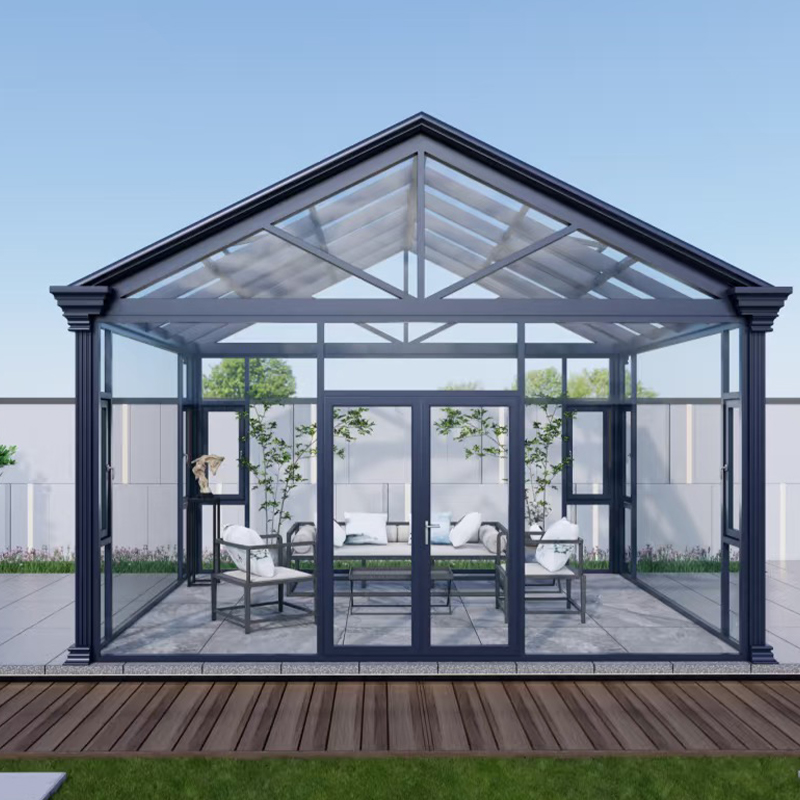
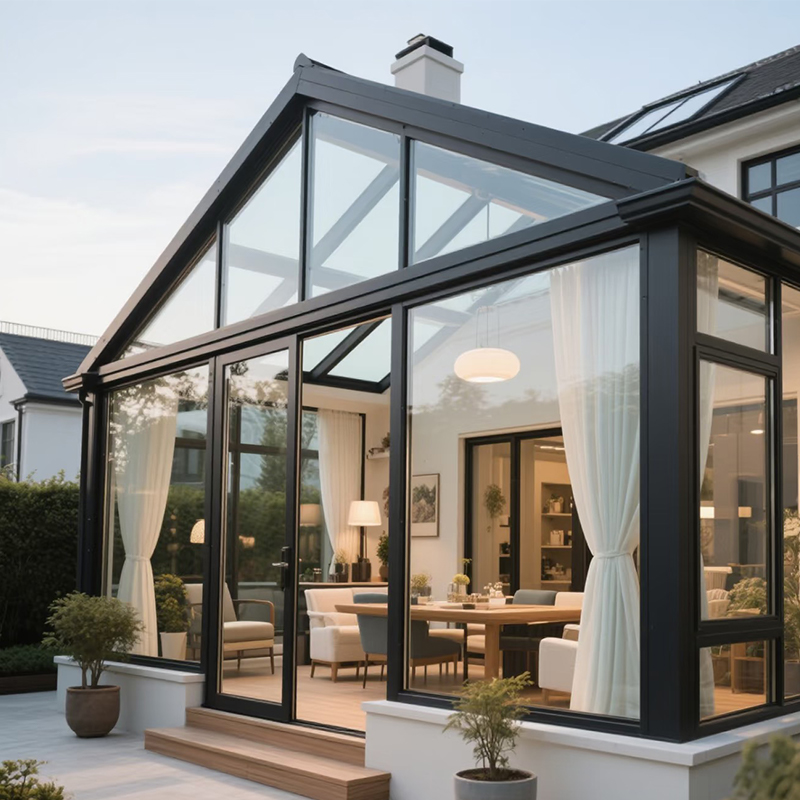 A-Frame Sunroom with Fast Drainage Roof DesignDual-pitch aluminum sunroom directs rainwater to roof edges quickly, helping reduce ponding, water ingress and ice formation while keeping glazing cleaner.View Product →
On a sunroom, staining usually begins at the roof edges and in the channels below them, where a few millimetres of standing water are enough to leave a line within one season. A roof layout that sheds water quickly, supported by a frame that stays rigid under snow load, keeps surfaces dry enough to stay clean.
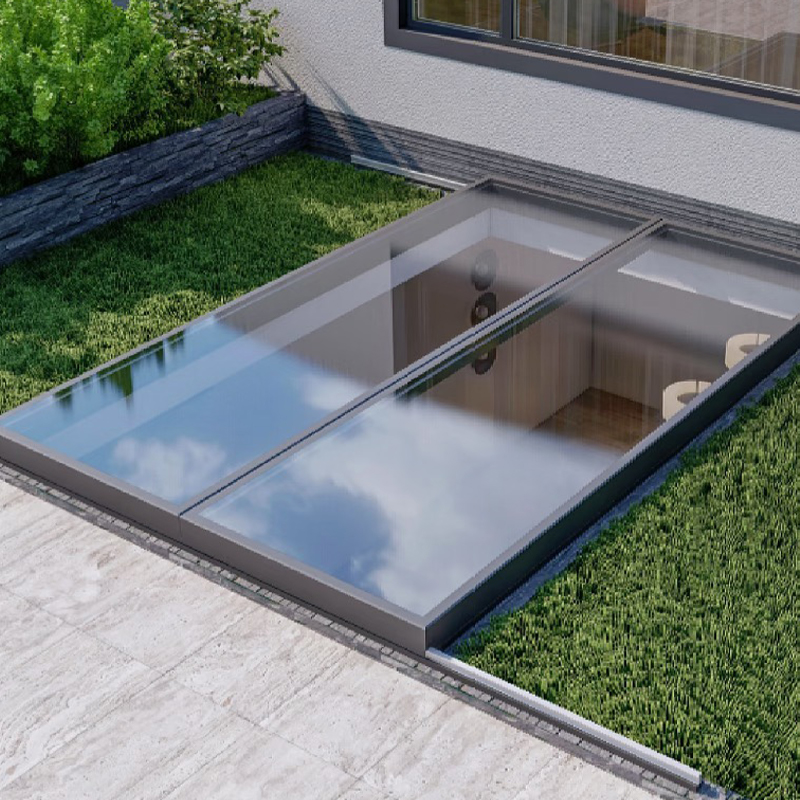
 Anti-Rain Ingress Suspended Skylight for Rooftop VentilationRotating sash skylight opens upward to create a shielded ventilation gap, deflecting rain while multi-layer seals resist water ingress when closed.View Product →
Roof glazing and skylights deserve the same attention. A suspended skylight detailed against rain ingress keeps the seal line above the path of running water, so drips do not rest on the frame and dry into rings.
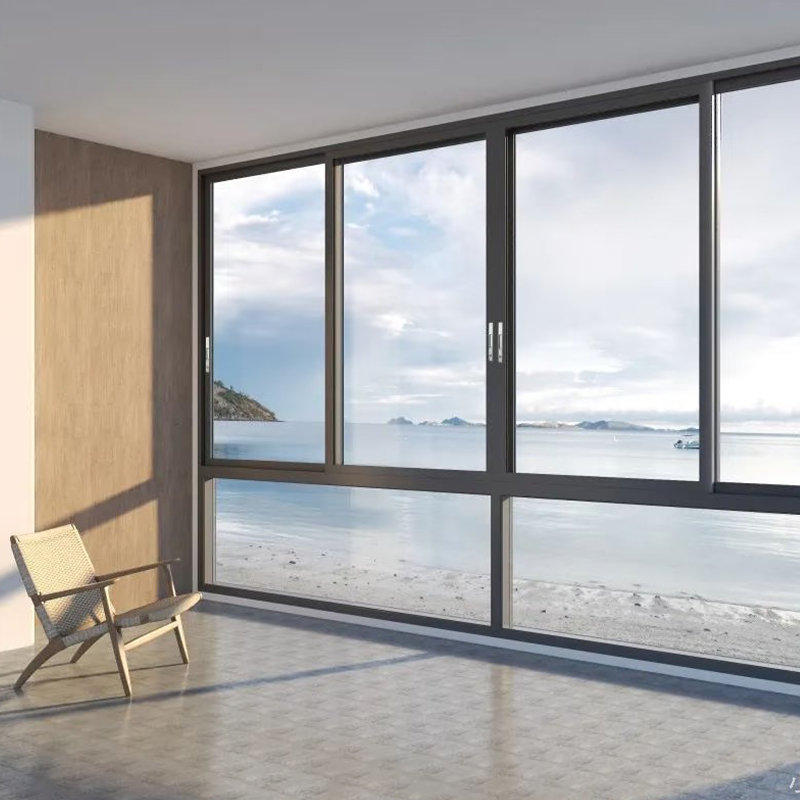
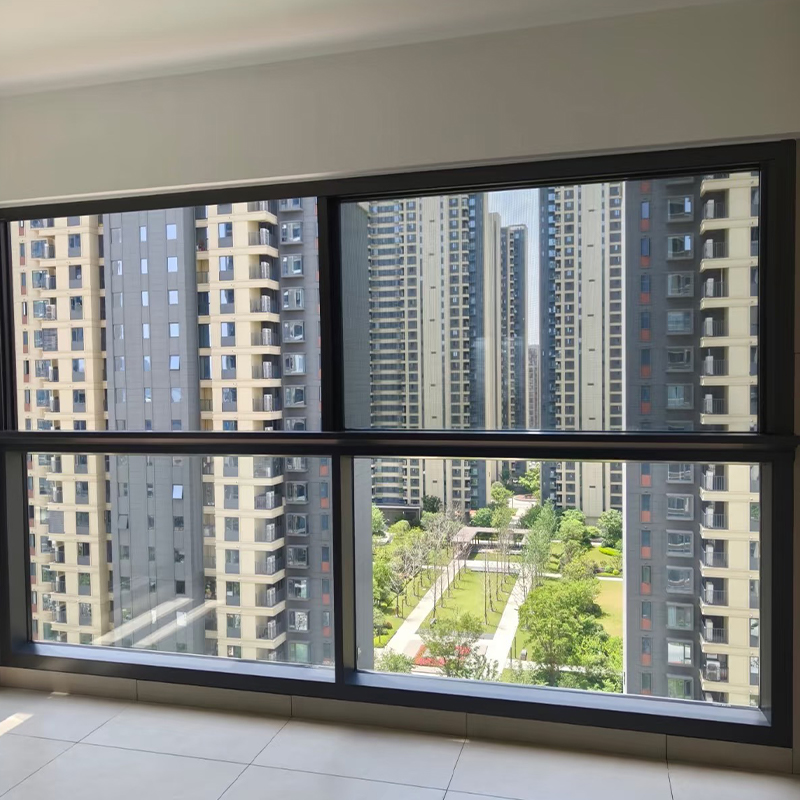 Corrosion-Resistant UV-Resistant Aluminum Sliding WindowHigh-grade aluminum sliding window with UV-resistant finish and sealing for humid, coastal conditions, offering smooth operation and customizable sizes, finishes and glass.View Product →
For windows facing salt air, heavy rain or long sun exposure, the finish matters as much as the shape. A sliding window built with a corrosion-resistant and UV-resistant surface holds up through seasons of wetting and drying, which makes routine cleaning far easier.
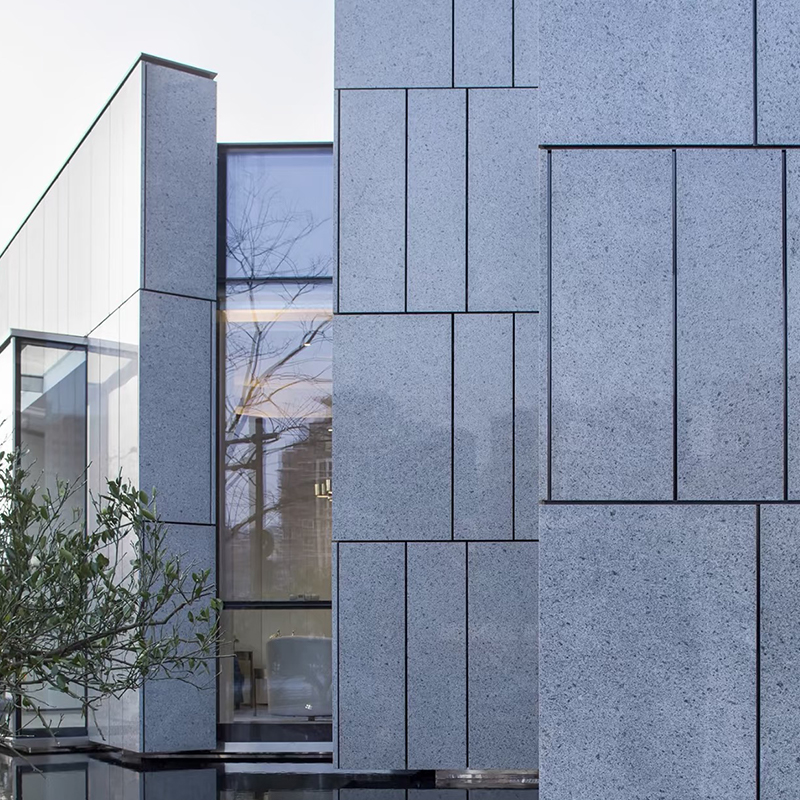
Large facades behave differently again, because a curtain wall has long vertical runs where water travels and horizontal joints where it stops. Pressure-equalised cavities, drained and ventilated joints and correctly sized weep holes do more for appearance than any cleaner, and our aluminum curtain wall systems are detailed around those points.
A Maintenance Rhythm That Works
Aluminum is low maintenance, not no maintenance. A short routine twice a year keeps most frames looking close to new.
- Rinse frames and sills with clean water every few months, especially after a dry spell when dust has built up.
- Clear weep holes and track channels with a soft brush. A blocked hole is the most common reason a mark keeps returning in the same place.
- Dry horizontal surfaces such as sills, railing caps and louver blades after washing rather than letting them air dry.
- Check fixings and sealant lines once a year, since a tired gasket keeps water where it should not be.
If you are planning new openings rather than maintaining old ones, our guide to sliding window benefits, costs and installation explains how profile choices affect long-term upkeep.
When the Stain Is Worth Reporting
Occasionally a mark is not a maintenance issue at all. If staining appears along a seam within months of installation, if the coating powders when you rub it, or if white corrosion creeps out from under a gasket, that belongs in a conversation with the supplier rather than in a cleaning session. We run production under an ISO 9000 quality system partly so that a finish problem can be traced back to a batch, a pretreatment step or an installation detail instead of being guessed at.
In the end, a water stain on aluminum is a small piece of evidence. Send a photograph, describe the surface and mention how long the mark has been there, and most of the time we can tell you whether it calls for a cloth and some vinegar or whether it deserves a closer look.

- Mobile
- Products
- Aluminum Window Series
- Aluminum Door Series
- Aluminum Sunroom Series
- Aluminum Sunroof Series
- Aluminum Louver Series
- Aluminum Railing Series
- Aluminum curtain wall
- Aluminum panel
- Aluminum door, window and curtain wall auxiliary materials
- Contact Us
-
-
+86-137 5720 8001

-
[email protected]

-
Room 102, Building 7, No. 399 Shushan Road, Hudong Street, Wuxing District, Huzhou City, Zhejiang Province, China

-


